Swiss-turned shafts, pins and joint parts for robots
We are a turning shop in Dongguan, China. Eight Japanese sliding-head lathes turn bar from 0.5 to 20 mm into precision parts for robot joints, actuators, gear motors and grippers, in series from 300 pieces.
Send a drawing. We reply by email within 24 hours, with questions or a quote.
- Bar diameter
- 0.5–20 mm, up to 45 mm on one lathe
- Tolerance
- ±0.005 mm on turned features
- Materials
- Stainless steel, brass, aluminium, free-cutting steel
- Series
- From 300 pieces per part number
- Samples
- Two weeks
- 2010Founded in Shenzhen
- 8Tsugami and Citizen sliding-head lathes
- ±0.005 mmtightest tolerance we commit to on turned features
- Ø 0.5–20 mmbar range on the sliding-head lathes
- 2017first series parts for humanoid and service robots
What we make
Small, round, precise parts in metal, made in quantity.
Shafts and pins
Motor shafts, output shafts, axles, dowel pins and hinge pins. Long, slender parts are what a sliding-head lathe is built for.
Joint and actuator parts
The turned parts inside a robot joint or a linear actuator: spindles, sleeves, bushings, spacers and threaded parts.
Collets and gripper fingers
Slotted collets for dispensing and coil-winding machines, and gripper fingers for industrial manipulators.
Where turned parts usually go wrong, and what we do about it
The prototype shop cannot follow you into series.
Our lathes are bar-fed and set up for repeat runs. A part number starts at 300 pieces, and the same machine and program run the next batch.
Twelve CNC lathes, scheduled 22 hours a day and 26 days a month.
Long, thin parts come back bent or tapered.
On a sliding-head lathe the bar is held in a guide bush right next to the tool, so a slender part cannot bend away from the cut the way it does on a conventional lathe.
Tsugami B0203 and B0205 and a Citizen Cincom A20, working bar from 0.5 mm.
The website promised microns. The parts missed a hundredth.
We quote ±0.005 mm as our limit on turned features, and we tell you before the order if a dimension on your drawing is beyond it.
The limit is stated by our production and quality team and written into the quote.
Turned and milled parts from two suppliers do not fit each other.
One order covers both. Turning runs in our plant. Milled housings and brackets run on our four machining centres or at partner shops, and everything is inspected together before it ships.
Partner equipment is listed separately on the capability page, so you know who makes what.
Parts arrive without paperwork.
Each shipment comes with an outgoing inspection report. Mill certificates for the bar and third-party substance test reports are available when you ask for them at quote stage.
The quality page lists what each document contains.
From drawing to series
Drawing
Send a STEP file and a PDF drawing with tolerances, material and quantity.
Review and quote
We check what fits our machines, flag dimensions that need discussion, and quote.
Samples
Sample parts in two weeks, with a measurement report.
Series
Production from 300 pieces per part number. Lead time is agreed with each order.
Shipping
Outgoing inspection, then shipment with the documents you ordered.
Omni wheels, made in our own plant
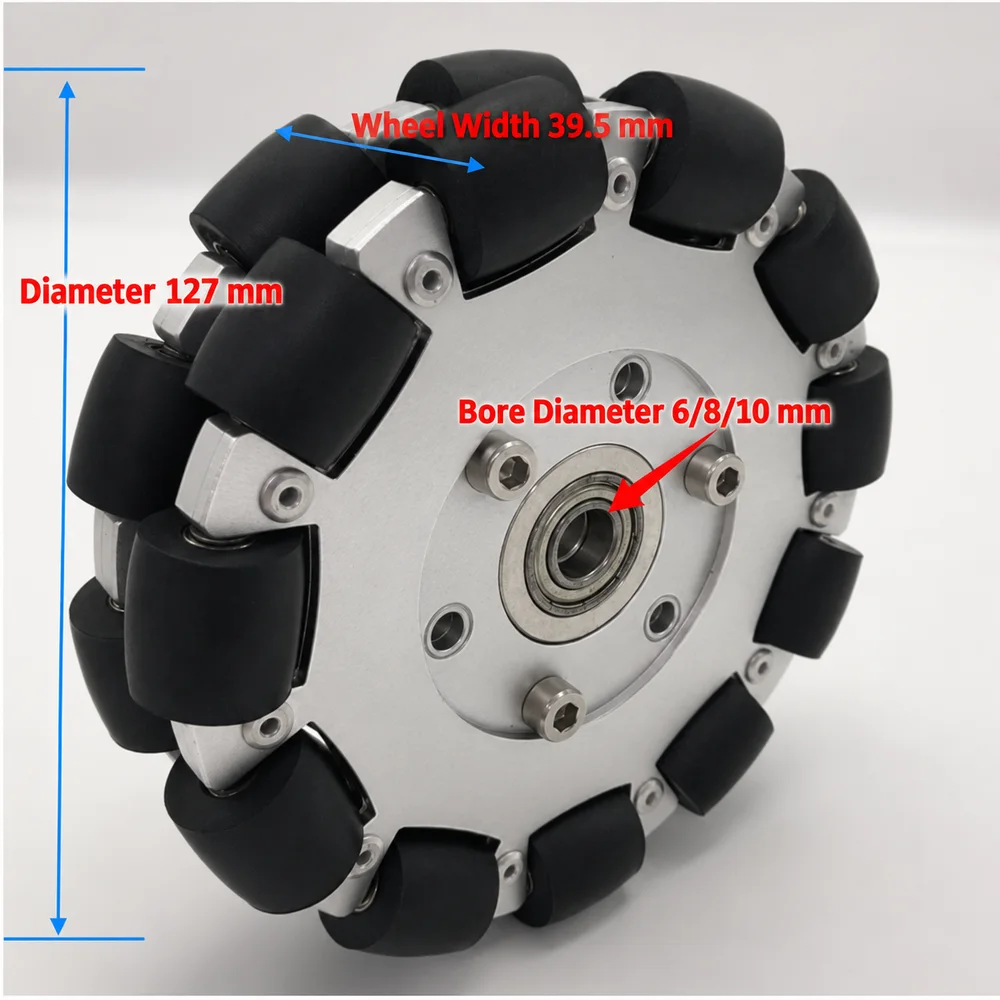
Besides custom parts we make our own omni wheels for mobile robots and AGVs: aluminium hub, rubber rollers, 100 to 152 mm in diameter, rated 35 to 50 kg per wheel.
Is this the right shop for your part?
A good fit
- Turned parts from 0.5 to 20 mm in diameter, up to 45 mm on request
- Series of 300 pieces or more per part number, with samples first
- Stainless steel, brass, aluminium alloy or free-cutting steel
- Tolerances down to ±0.005 mm on turned features
- Robots, actuators, gear motors, grippers and automation equipment
Not a fit
- Turned parts larger than 45 mm in diameter
- Tolerances tighter than ±0.005 mm
- Orders that will never go beyond a handful of pieces
- Programmes that require sector-specific quality certificates beyond ISO 9001
Questions buyers ask first
What is your minimum order quantity?
Our standard minimum is 300 pieces per part number. Sample parts are made before a series order. If your first batch is smaller, tell us the quantity and we will say whether we can run it.
How long do samples take?
Two weeks for sample parts once the drawing is confirmed. Production lead time depends on quantity and is agreed with each order.
What tolerances can you hold?
On turned features we commit to ±0.005 mm at the tightest. Tell us which dimensions are critical, and we will say before the order if any of them is beyond that.
Which materials do you turn?
Stainless steel, brass, aluminium alloy and free-cutting steel are our regular materials. Anodizing, electroplating and painting are done by partner shops and delivered as part of the same order.
Which files should I send?
A STEP file and a PDF drawing with tolerances, material, surface treatment and quantity. We can sign an NDA before you send anything.
Who are your customers?
Since 2017 we have supplied joint parts and omni wheels to Chinese makers of humanoid and service robots, and before that parts for drones, office equipment and automation. Customer names are covered by confidentiality agreements, so we do not publish them.
Where are you, and how do you ship?
The factory is in Dalang, Dongguan, in Guangdong province. Our parts are exported from China to customers in Europe and North America. Delivery terms are agreed in the quote.
Have a turned part to quote?
Send the drawing. We reply by email within 24 hours.